
School garden project
Seeds of Change: Supporting Cambodian Self-Sufficiency Through Gardening
The School Garden Project was established during the peak of COVID-19, when travel restrictions prevented Cambodians from earning sufficient income to provide for their food needs. We began by distributing rice and vegetable seeds to families in need and training Cambodians in cultivation techniques. After a successful pilot project, Kamboo Project continued this initiative in its schools upon their reopening after the pandemic.
Background
The COVID-19 pandemic has profoundly impacted many families, leading to significant job losses due to the halt in tourism and limited trading opportunities. Travel restrictions have further compounded the issue, preventing people from seeking work in neighboring countries like Vietnam and Thailand. This situation has forced many migrant laborers to return home, exacerbating the economic strain on families.
School closures have interrupted students’ education, limiting their access to proper learning environments. As a result, many children have had to contribute to their family’s income by collecting cans and bottles for recycling. In response to these challenges, we initiated the Home Garden pilot project, the precursor to today’s project, to stay connected with learners and the community while addressing food insecurity.
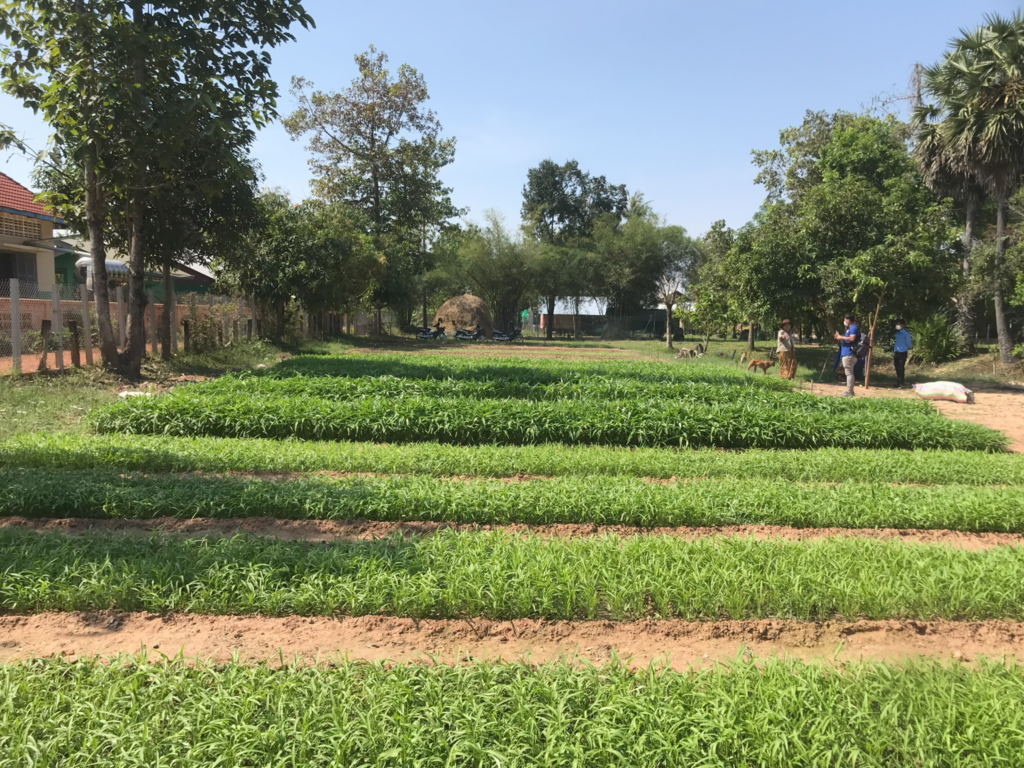
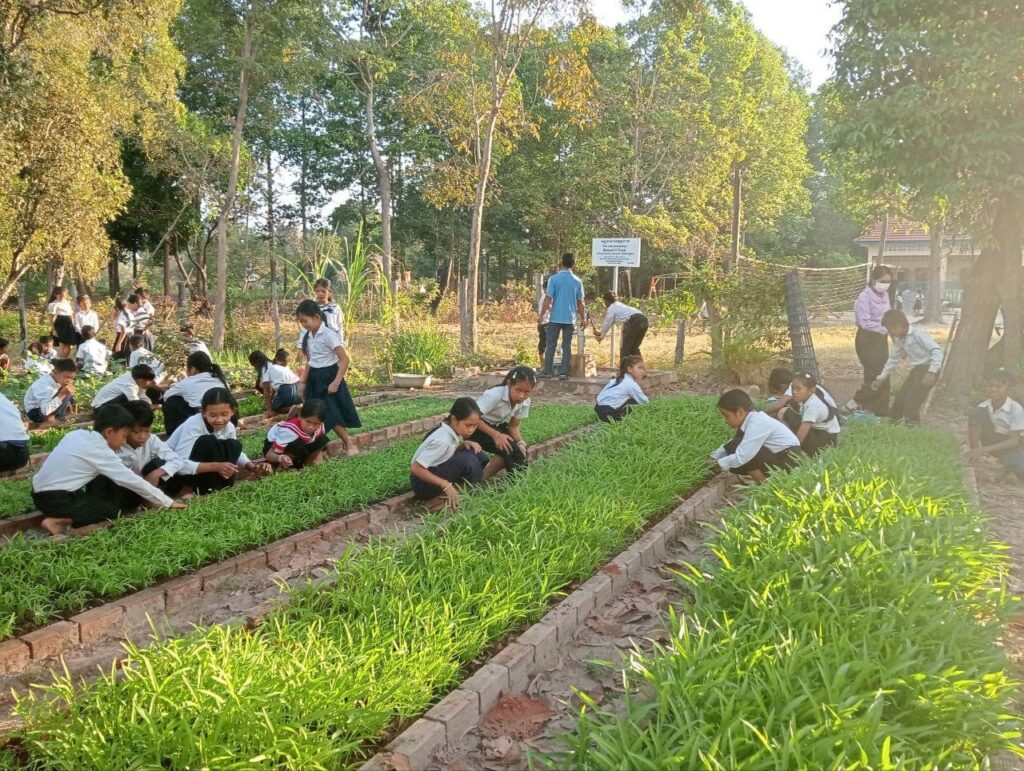
Our confidence in traditional gardening methods inspired us to introduce these techniques to schools once they reopened. We aim to empower teachers to encourage students to become self-sufficient by learning about planting and land management. The project commenced immediately after schools reopened, and the endline survey and case study at the end of 2024 indicated that schools need more support for their gardens to reduce the cost of student breakfasts.
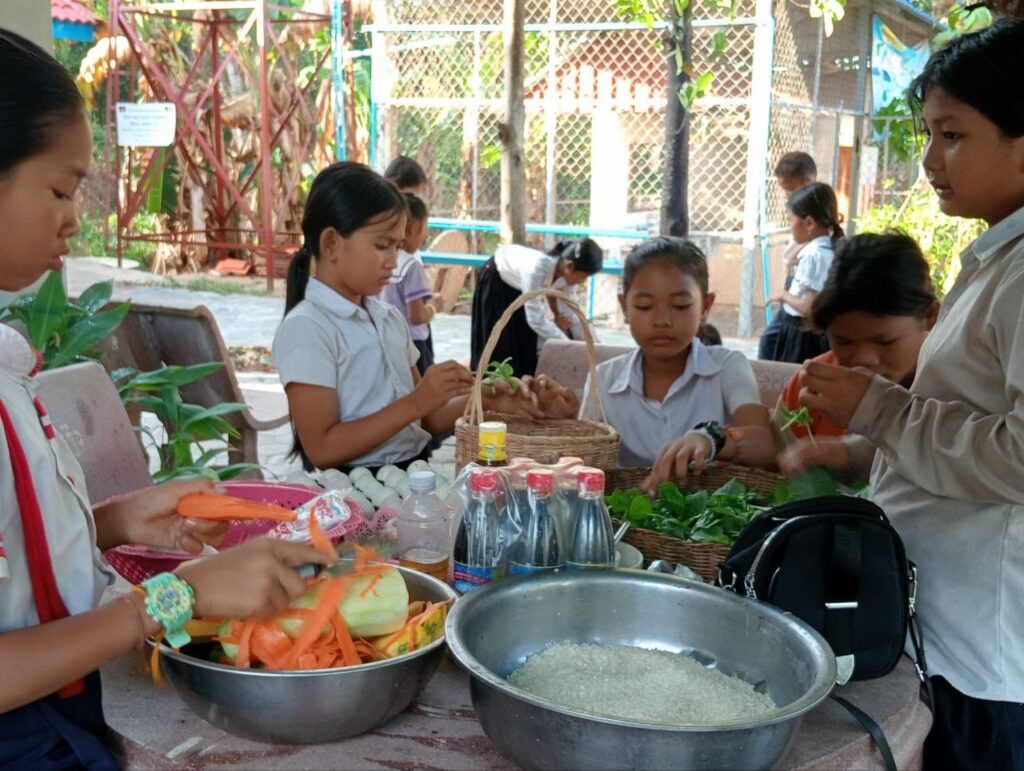
Schools that provide breakfast to students utilize vegetables from their own gardens, offering organic produce like water spinach that students feel proud to have grown themselves. However, Kamboo Project, a young NGO, lacks regular donors and faces challenges in securing consistent funding. This has limited our ability to source and contact new donors.
To sustain and expand our school garden efforts, we need funds to purchase seeds, fertilizer, and tools. Donations of seeds and fertilizers would significantly assist more schools in growing their own vegetables, thereby enhancing food security and fostering a sense of achievement among students.
Goals and Objectives
The School Garden Project aims to alleviate food insecurity and provide sustainable food sources for families impacted by the Covid-19 pandemic. The project seeks to equip learners and their families with practical farming skills, enhancing their ability to sustain themselves.
Implementation Strategy
Since the onset of the Covid-19 pandemic, many families have faced severe food shortages. In response to community requests for assistance, Kamboo Project initially provided emergency food supplies to learners and families of three primary schools. Additionally, we supported a quarantined village with one ton of rice in collaboration with the District Governor’s office.
Recognizing the need for a more sustainable solution, we partnered with the Human and Hope Association, a local NGO running a successful Home Garden project. In July 2021, as schools reopened following pandemic-related closures, we decided to build on their success by launching our own initiative—the School Garden Project. This initiative, now operational in four schools, serves as a pilot program aimed at addressing food scarcity and providing long-term support to the community.
Activities
1. Training and Education:
- We initially received training and support from the Human and Hope Association, gaining valuable knowledge in sustainable farming techniques. Since 2023, we have operated independently.
- Learners and their families participate in workshops and hands-on training sessions to develop their gardening skills.
2. Garden Establishment:
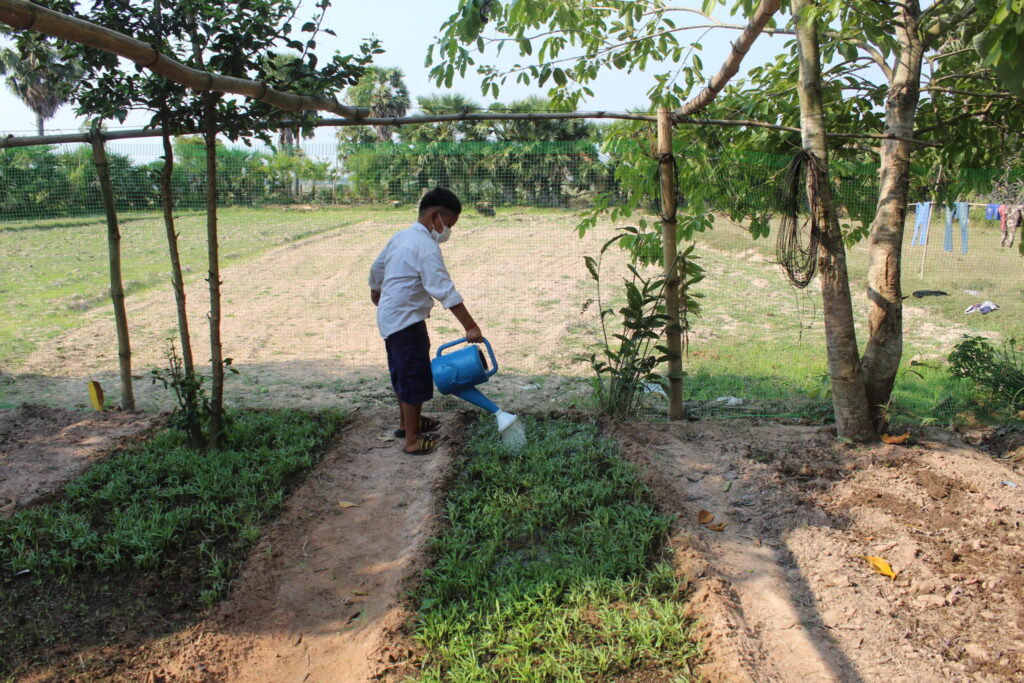
- Establishing gardens within school premises where students and their families can practice and apply their new skills.
- Providing necessary gardening tools, seeds, and materials to ensure successful cultivation.
3. Community Engagement:
- Conducting regular meetings with school staff, students, and community members to discuss progress, challenges, and successes.
- Encouraging community involvement and ownership of the gardens to foster a sense of responsibility and collaboration.
Monitoring and Evaluation
1. Progress Tracking:
- Regularly monitoring the growth and health of the gardens through twice-monthly scheduled visits and inspections.
- Keeping detailed records of planting dates, crop yields, and any issues encountered.
2. Feedback Mechanisms:
- Collecting feedback from learners, families, and school staff to identify areas for improvement and adapt strategies as needed.
- Conducting surveys and interviews to gather qualitative data on the project’s impact on food security and skill development.
3. Reporting:
- Preparing monthly and quarterly reports to document progress, challenges, and achievements.
- Sharing findings with stakeholders, including the Human and Hope Association, school authorities, and the wider community.
4. Evaluation:
- Assessing the project’s overall impact on food security, educational outcomes, and community well-being at the end of each growing season.
- Using evaluation results to refine and expand the project, ensuring continuous improvement and sustainability.
Through careful implementation and ongoing monitoring, the School Garden Project aims to create a resilient and self-sufficient community capable of overcoming food insecurity and enhancing overall well-being.
Budget
The following table provides an overview of the materials and operating costs required for the school garden project as well as the corresponding funding amounts per school and year:
| No. | Description | Quantity | Price | Amount | Total | $1.875 |
|---|---|---|---|---|
| 1 | A set of materials, including seeds, fertilizer, and tools | 10 | $150 | $1.500 |
| 2 | Operational costs, including transportation and visitation | 1 | $375 | $375 |